The traditional world of software engineering has always been protected by a high wall of complex syntax, expensive degrees, and years of intense training.
For decades, if a business owner had a brilliant idea for an application, they were completely dependent on hiring a specialized team of developers to bring it to life.
However, a massive shift is currently taking place that is tearing down these barriers and inviting everyone to the digital building table.
Low-code and no-code platforms are transforming the way we think about creation by replacing thousands of lines of manual code with intuitive, visual interfaces.
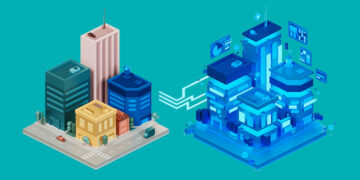
This movement is effectively democratizing technology, allowing people without any formal technical background to build sophisticated tools and automated systems.
By using drag-and-drop elements and pre-built logical blocks, a marketing manager or a small business owner can now do what used to take a full engineering department months to complete.
We are entering a new era where the “creator economy” is no longer limited by who can write Python or Java, but rather by who has the best ideas.
Understanding this landscape is essential because it represents the future of work, productivity, and the rapid evolution of the global digital economy.
Defining the No-Code and Low-Code Landscape
While these two terms are often grouped together, they serve slightly different audiences and technical needs within the industry.
Both are designed to speed up the development process, but the “depth” of the technical requirement is what sets them apart.
A. The Pure No-Code Experience
No-code platforms are built specifically for “citizen developers” who have zero experience with programming languages.
The entire process is visual, using a graphical user interface where you simply move boxes and connect dots to define how an app works.
B. The Hybrid Low-Code Approach
Low-code platforms are a middle ground designed for people who have a basic understanding of logic or for professional developers who want to work faster.
These tools handle the boring “boilerplate” code automatically but allow users to inject custom scripts when they need a very specific or complex feature.
C. Visual Integrated Development Environments
Both systems rely on a visual workspace that provides an immediate preview of what the final product will look like.
This “What You See Is What You Get” (WYSIWYG) approach removes the guesswork that usually comes with traditional text-based coding.
Why This Shift Is Happening Now
The demand for custom software has exploded in recent years, far outstripping the number of available professional programmers in the workforce.
Companies are facing a massive backlog of digital projects, leading to frustration and lost revenue opportunities.
A. Bridging the Talent Gap
By empowering non-technical employees to build their own solutions, companies can solve problems without waiting for the IT department.
This frees up professional developers to focus on high-level security, core infrastructure, and groundbreaking innovations.
B. The Need for Business Agility
In a fast-moving market, waiting six months for an app to be developed is no longer an option for competitive businesses.
No-code tools allow a team to build a “Minimum Viable Product” (MVP) in a matter of days or even hours to test an idea.
C. Cost Reduction for Startups
Building a custom application used to cost tens of thousands of dollars in labor alone.
With these platforms, entrepreneurs can launch their businesses with a fraction of the initial capital, reducing the risk of failure.
Key Features of Modern No-Code Tools
If you look under the hood of a no-code platform, you will find several powerful components that make the “magic” happen.
These features are designed to be as user-friendly as a social media app while remaining powerful enough for enterprise use.
A. Drag-and-Drop User Interface (UI) Builders
You can create beautiful buttons, forms, and galleries by simply selecting them from a menu and placing them on a canvas.
Most platforms ensure that these designs are “responsive,” meaning they automatically look great on both iPhones and desktop computers.
B. Workflow Automation and Logic Engines
This is the “brain” of the app where you define “if this happens, then do that” scenarios.
For example, you can set a rule that says “If a new customer signs up, send them a welcome email and add them to the database.”
C. Pre-Built Data Connectors
One of the strongest features is the ability to link your new app to existing tools like Google Sheets, Slack, or Shopify.
This allows data to flow seamlessly between different platforms without you ever having to write an API integration script.
Real-World Applications and Use Cases

Low-code and no-code are not just for simple to-do lists; they are being used to power serious business operations across every industry.
From internal HR portals to customer-facing marketplaces, the versatility of these tools is truly impressive.
A. Internal Business Process Automation
Many companies use these tools to replace messy spreadsheets with clean, organized internal apps for tracking inventory or expenses.
Employees can build custom dashboards that pull real-time data, helping them make better decisions faster.
B. Customer Relationship Management (CRM)
Small businesses can build their own custom CRM systems that fit their specific workflow perfectly.
Unlike expensive “one-size-fits-all” software, a no-code CRM can be adjusted and changed instantly as the business grows.
C. Content Management and E-commerce
Many of the world’s most popular websites are built on no-code foundations that allow creators to sell products and publish blogs.
The ability to manage a full-scale online store without touching code has launched thousands of successful digital brands.
The Impact on Professional Developers
A common myth is that no-code technology will put professional software engineers out of a job.
In reality, the opposite is true; it is actually making their lives better and their work more meaningful.
A. Focusing on High-Value Tasks
Developers no longer have to spend their time building simple login screens or basic contact forms.
They can dedicate their expertise to solving complex mathematical problems, improving data security, and exploring artificial intelligence.
B. Rapid Prototyping for Engineers
Even pros use no-code tools to quickly mock up an idea for a client before they start writing the “real” code.
It acts as a high-speed sketching tool that ensures everyone is on the same page before the heavy lifting begins.
C. Creating the Platforms Themselves
Professional engineers are the ones building the very no-code platforms that everyone else uses.
This creates a new sector of the tech industry focused on building “the tools that build the tools.”
Security and Scalability Concerns
As with any powerful technology, there are legitimate concerns regarding how safe and “strong” these applications really are.
Critics often wonder if a no-code app can handle millions of users or if it is vulnerable to hackers.
A. Enterprise-Grade Security Standards
Top-tier platforms invest millions in security, often providing better protection than a small team of developers could build from scratch.
They offer built-in encryption, user authentication, and regular security audits as part of their service.
B. The Vendor Lock-in Problem
One risk is that once you build an app on a specific platform, it can be very difficult to move it somewhere else.
It is important to choose platforms that allow you to export your data or your code if you ever decide to leave.
C. Performance for High-Traffic Apps
While great for most uses, extremely data-heavy applications (like high-frequency trading) still require traditional custom code.
However, for 90% of business needs, modern no-code platforms are more than fast enough to satisfy users.
The Future: AI and No-Code Integration
The next frontier for this technology is the integration of Generative Artificial Intelligence.
Imagine being able to build a fully functional application just by describing it to a computer in plain English.
A. Natural Language Development
We are already seeing tools where you can type “Build me a fitness tracking app with a dark theme” and the AI generates the layout.
This will further lower the barrier to entry, making software creation as easy as having a conversation.
B. AI-Powered Logic Suggestions
Future platforms will suggest the best workflows for your app based on successful patterns from thousands of other users.
This “smart assistance” will help people build more efficient and error-free applications without needing a teacher.
C. Personalized Software for Everyone
In the future, we won’t just use apps made by big companies; we will build our own personal apps for our specific lives.
Whether it’s a tool to track your personal library or manage your home garden, software will become truly personal.
Conclusion

The democratization of code is one of the most exciting changes in modern history.
We are finally moving away from a world where only a few people hold the keys to technology.
Now, a great idea is the only thing you need to start a digital revolution.
The wall between “technical” and “non-technical” people is crumbling every single day.
Low-code and no-code tools are giving a voice to millions of creative minds around the globe.
This shift doesn’t just create better apps; it creates more opportunities for everyone.
The future of software is not about syntax, but about the power of human imagination.
Get ready to build something amazing, because the power is now in your hands.